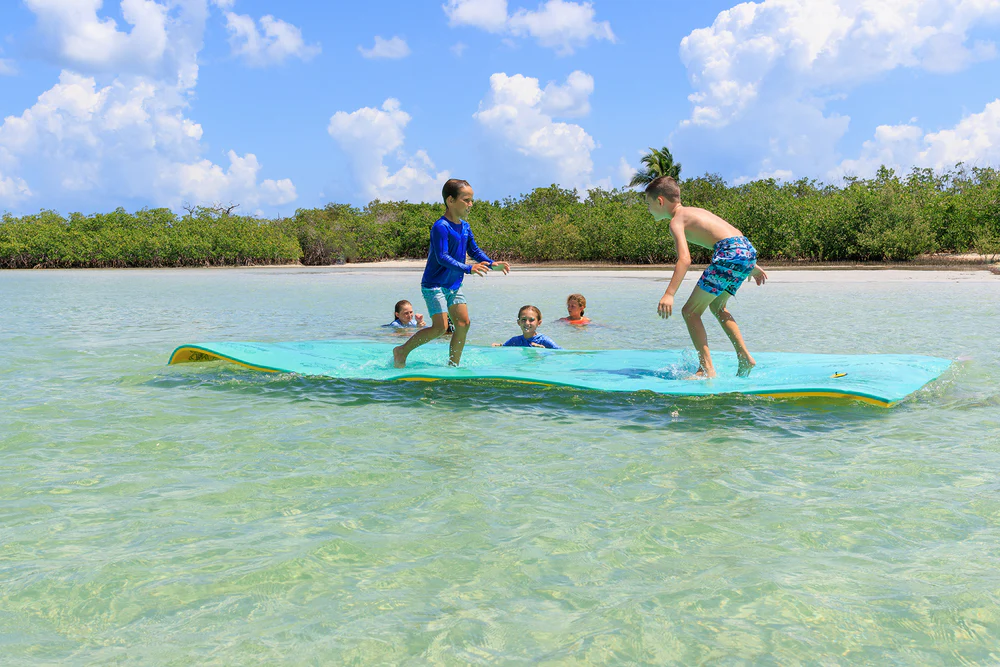
The Original Lily Pad available at ToonsUSA in Oklahoma and Missouri is the ultimate water playground for the entire family. It’s a floating foam island that is safe, lightweight, and maintenance-free. Allow your kids, friends, and grandparents to play, run, or relax on America’s favorite water toy.
Designed with 2 layers of cross-linked polyethylene foam and patented FlexCore technology, the Aqua Lily Pad is the most durable foam mat on the market! When not in use, simply roll the pad into a compact form, and secure it with our storage straps. Aqua Lily Pads are available in 9′, 12′, 15′, 18′, and 20′ lengths to match your crowd size, activity levels, and weight capacity. Choose the one that fits your need and float your way.
Product Dimensions: 6 ft x 9ft x 1.375in | 6 ft x 12ft x 1.375in | 6 ft x 15ft x 1.375in | 6 ft x 18ft x 1.375in | 6 ft x 20ft x 1.375in
Boating Around Lily Pads: What Every Boater Should Know
Lily pads are a common sight on lakes, ponds, and slow-moving waterways, especially during the warmer months in Oklahoma & Missouri. While they add natural beauty and provide important habitat for fish and wildlife, lily pads can also present challenges and risks for boaters. Understanding how to navigate around lily pads safely helps protect your boat, the environment, and everyone on the water.
What Are Lily Pads and Why They Matter
Lily pads are floating aquatic plants rooted in shallow water. Their broad leaves create shade, reduce wave action, and provide cover for fish, amphibians, and insects. Many species of fish, especially bass and panfish, rely on lily pads for protection and feeding areas.
Because lily pads grow in shallow areas, they often mark zones where water depth changes quickly—something every boater should pay attention to.
Hazards of Boating Through Lily Pads
Boating directly through lily pads can cause several problems:
Propeller Damage: Lily pad stems can wrap tightly around propellers, leading to overheating, vibration, or mechanical failure.
Engine Overheating: Vegetation can block water intakes, reducing cooling flow to the engine.
Steering Issues: Dense pads can make steering unpredictable or cause sudden stops.
Hull Scratches: Fiberglass and aluminum boats can be scratched by thick stems and debris beneath the surface.
Shallow Water Risks: Lily pads usually grow in shallow areas where stumps, rocks, or mud may be present.
Best Practices for Boating Near Lily Pads
To stay safe and avoid damage, follow these boating tips:
Slow Down: Reduce speed when approaching lily pad fields. Idle speed is often safest.
Trim Your Motor Up: Raising the motor helps prevent propeller entanglement.
Avoid Dense Patches: If possible, steer around thick lily pad areas instead of cutting through them.
Watch Water Depth: Use depth finders or visual cues to avoid grounding.
Clear the Prop Safely: If vegetation becomes tangled, shut off the engine before removing it by hand.
Environmental Responsibility
Lily pads are protected in many waterways because of their ecological importance. Cutting through them repeatedly can damage root systems and disrupt wildlife habitat. Responsible boating means respecting these natural areas and minimizing disturbance whenever possible.
Fishing and Lily Pads
For anglers, lily pads are often prime fishing spots. Many boaters will position their boats along the edges of lily pads rather than entering them. This approach protects the boat while still allowing access to productive fishing water.
Specialized equipment like shallow-water anchors, trolling motors, and weedless lures can help anglers fish lily pads without harming vegetation or equipment.
Know Local Regulations
Some lakes and reservoirs have rules restricting boat access through vegetated areas, including lily pads. Always check local boating regulations and signage before navigating these zones.
Conclusion
Lily pads are a valuable and beautiful part of many waterways, but they require caution from boaters. By slowing down, navigating around dense growth, and respecting the environment, boaters can enjoy safe and responsible time on the water while preserving these important natural habitats for future generations. If you are in the market for a Lily Pad for your boating experience call or come by any of our 5 locations throughout Missouri & Oklahoma.